


Location, location, location!
When I think of successful regional filmmakers who are intertwined with place, I think of Kelly Reichardt or Richard Linklater. Reichardt’s Oregon-set films, like NIGHT MOVES and FIRST COW, paint vivid portraits of people against the backdrop of the Pacific Northwest. Texas and its unique idiosyncrasies are reflected in many of Linklater’s films, from DAZED AND CONFUSED to BERNIE. There clearly is a love for their communities that seeps through the screen across their individual oeuvres.
Shooting on location naturally brings the richness of those places to life for audiences, showing how people live, work, and speak. However, filming on location, particularly in rural communities without strong production resources or tax incentives, is challenging and doubly so when your budget is limited.
Now, imagine choosing to make your low-budget movie on an island, smack in the middle of the Pacific…
When you think of Hawaiʻi, there’s an allure of sandy beaches, palm trees, and mai tais. That postcard-perfect vision of Hawaiʻi has been carefully crafted thanks to numerous studio films and network television shows that provide audiences around the world with hints of “life” here. Outside of Hollywood’s portrayals of Hawaiʻi on the screen, only a handful of narrative feature films have been written, produced, and shot here in the last few decades. That is, thankfully, changing.

As a producer who lives and works in Hawaiʻi, how did I produce my Slamdance-winning narrative feature, CHAPERONE, in rural Hawaiʻi for less than $200,000? Here’s what centering community and place on a budget looks like.
CHAPERONE (written/directed by Zoë Eisenberg) won the Slamdance Film Festival’s Grand Jury Award for Best Breakout Feature in 2024 and was recently made available to stream on AppleTV and Amazon.
About the film: Misha, a 29-year-old woman alienated by friends and family for her lack of ambition, finds a dangerous acceptance in a bright 18-year-old athlete who mistakes her for a fellow high school student.
In general, Hawaiʻi and low-budget anything is a joke.
In case you haven’t been to Hawaiʻi, there are a few things you should know.
Hawaiʻi is the most remote island chain in the world. For context, it’s a 5-6 hour flight from LAX. Not only is it hard to get to, but it’s also one of the most expensive places to live in the United States, with overall costs (housing, transportation, gas, and food) typically 30-50% higher than anywhere on the continent.

To make things more challenging, the state is divided into eight (8) main islands. The majority of the state’s resources are consolidated on the island of Oʻahu, where the state capital, Honolulu, is located. Oʻahu is densely populated and inhabited by roughly one (1) million people, or two-thirds of Hawaiʻi’s total population.
Resources on the other islands are therefore limited, not just for film supplies, and difficult to access as inter-island travel is dependent on air transport. This is why the state incentivizes production outside Oʻahu through a tiered qualified tax rebate: 22% for expenditures made on Oʻahu and 27% for expenditures made on the other islands.
I was born and raised on Hawaiʻi island (often called the Big Island), where it has always felt like there are more goats and cows than people. Growing up in a rural community like this, it was hard to imagine building a career in film, so I left to pursue opportunities elsewhere. In moving back in 2020, I wanted to prove to myself that it’s possible to produce our own stories here, even with the limited resources we have.
So my dear reader, now that we’ve established our baseline: how did we make CHAPERONE for under $200,000 in rural Hilo, Hawaiʻi??
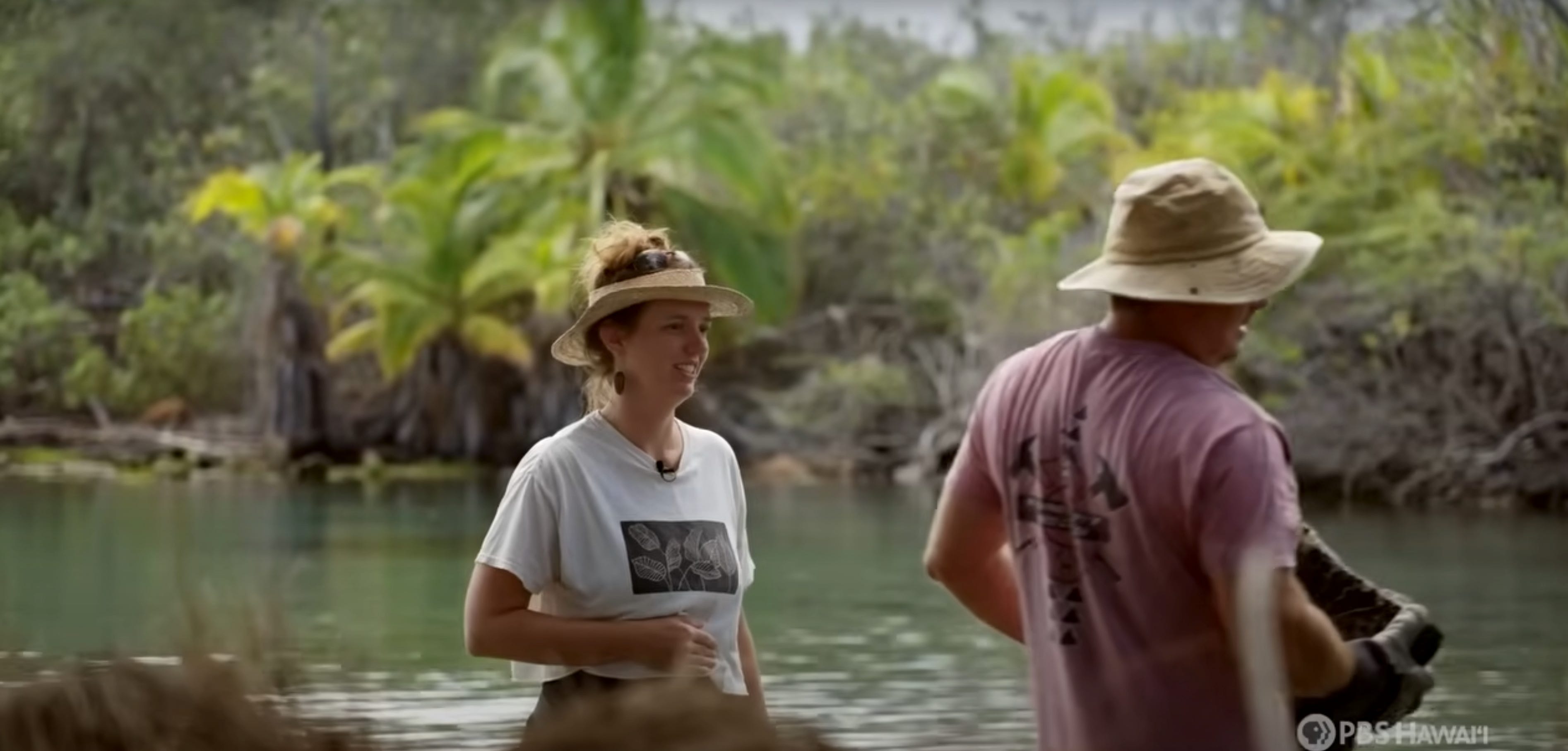
Writer/Director Zoë Eisenberg and I met in a state-funded development lab in Hawaiʻi called “Creative Lab Hawaiʻi - Producer’s Immersive” back in 2019. Rebecca Green (yes her!) was one of our mentors! At that time, I had been working in documentary film production in Austin, Texas, and was looking to expand my repertoire into narrative filmmaking – ideally back home in Hawaiʻi. Zoë had already been working in the narrative space in Hawaiʻi and came to the lab with a script she wanted to direct. Six years later, CHAPERONE is now available to rent/buy on AppleTV & Prime.
Before diving into the practical realities of making CHAPERONE, it’s important to understand our creative partnership. At the core of our collaboration is a shared commitment to local representation, both on-screen and behind the camera. That value guided our casting and hiring decisions, with a strong emphasis on employing local talent and crew. Our cast was entirely AANHPI, intentionally reflecting our diverse community in Hawaiʻi. Although a small number of collaborators were flown in from Oʻahu, Maui, and the continental U.S., the majority of our cast and crew were hired locally.
Although we aim to champion our local scene, as two white women, Zoë and I recognize that not every story is ours to tell. We would not be the right people to tell a story about the Hawaiian diaspora. But a story about an alienated woman living in a small, isolated town that happens to be in Hawaiʻi? Check!
Not only is Hawaiʻi Island home for me, but Zoë has called Hawaiʻi home for well over a decade. Prior to us connecting, Zoë wrote, produced, and co-directed two other micro-budget films shot entirely on Hawaiʻi Island, and previously ran the Made in Hawaiʻi Film Festival, which celebrated locally made films.
In addition to being a filmmaker, she also owns a circus studio in downtown Hilo, and is a published author (so go check out her book Significant Others, published by Harper Collins/Mira, also set in Hilo!). She’s a multi-talented, go-getter with deep ties to her East Hawaiʻi island community. This film celebrates that in so many ways.
Did we consider shooting anywhere else? No.
Could we have made this film anywhere else? Yes. But not for less than $200,000.

Like all ultra-low-budget projects, we worked with what we had.
CHAPERONE’s budget was raised through a combination of traditional investments, with a large number of investors, each putting in a small portion of the budget needed. Additional soft funding was raised through small grants and cash donations received through a nonprofit fiscal sponsor. We qualified as a SAG-UPA production, so cast and crew agreed to work on a low-budget scale, with Zoë cutting her rate entirely. Additionally, by filming on Hawaiʻi Island, the production qualified for a 27% state tax rebate on eligible expenditures exceeding $100,000.
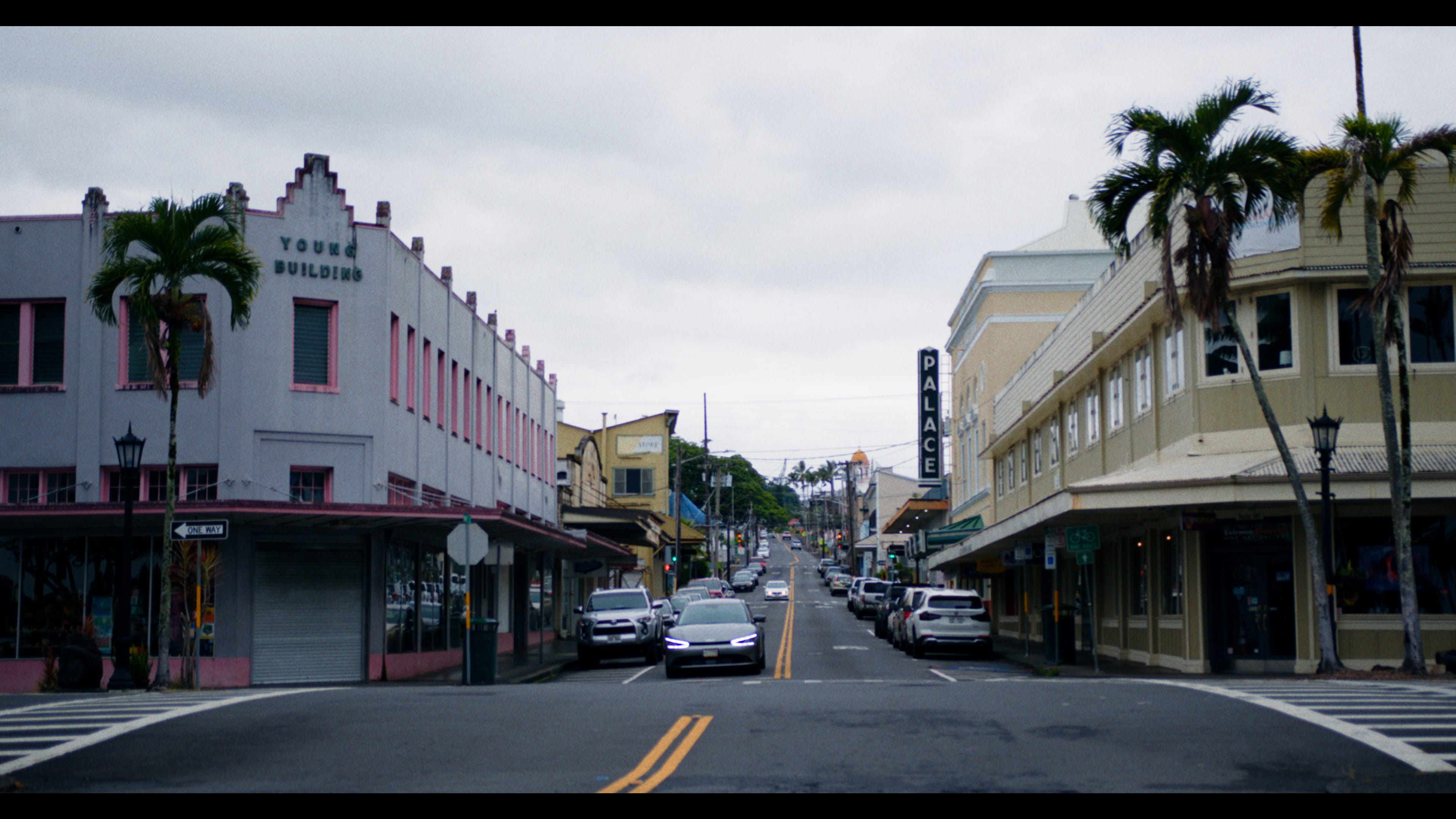
To keep costs down, we leaned into the generosity of our community, with a large portion of support for the film coming from in-kind goods and services. The majority of locations were friends’ homes or locally owned businesses. One of our main locations was the Hilo Palace Theater, a 100-year-old historic theater where Zoë’s husband is the Executive Director. With permission from their board, we were able to shoot there on a few of their down days.
Several executive producers, friends, and family donated their airline miles to help us cover the majority of interisland and continental flights for the handful of cast and crew we needed to fly in. To house them, we rented an incredible bed and breakfast (the Garden Manor) that doubled as both our main shooting location and cast & crew lodging, making for a summer camp-style experience.
Local bakeries donated their end-of-the-day goods to fuel our team with sweet treats throughout production. Several water companies, including Sanzo and Waikea Water, kept us hydrated, all in exchange for social media shout-outs and thank yous in our credits. These things kept everyone going on our shoestring budget.
Here’s where things got tricky.
Because of our rural location, everything was logistically more complicated. We couldn’t afford to forget something important because Amazon doesn’t do same-day delivery to the island. Extra planning in advance was required.
What, no “FilmTools” on Hawaiʻi Island? Nope! No camera rental house, either.
To solve our lack of access to professional gear, Sight and Sound, a local production house on Oʻahu, came on as an Executive Producer and donated a $30K+ camera and grip rental package to supply us with gear we didn’t have access to (or the budget for) on the island. We still had to ship that equipment via air freight interisland. Due to the dangers of shipping lithium batteries, someone from our team had to travel over to Oʻahu to hand-carry them back and forth.
Cheap, fast, and good. Can we choose all three?
To maintain production quality within our budget, we had to move fast. We shot across 17 locations in just 13.5 days. (No, I didn’t sleep those two weeks.) This insane schedule was made possible by two key factors: a two-camera, documentary-style approach that allowed us to capture coverage efficiently, and Hilo’s compact geography. Most of our locations were within a five-to ten-mile radius; often, simply across the street from one another.
Now I’m all about maximizing a schedule, but only if the cast and crew can maintain that pace safely.
Casting attachments are key.
In CHAPERONE, the lead protagonist, “Misha” is in every scene. She is a complex character that we want the audience to both love and hate, and the entire story hinges on her having a sparkling, if not uncomfortable, chemistry with her romantic interest to drive the story forward.
Since day one, Zoë had Mitzi Akaha, a Japanese-American actress, in mind for our “Misha”. Zoë found her via mutual friends on Instagram and became obsessed. Her face was plastered all over early decks. Even though I diligently pressed Zoë to look at other actresses, I knew, if that’s who Zoë wanted, that’s who we were getting. We ended up attaching Mitzi in 2021 when we first thought we could shoot. We then had to put production on pause for several reasons. So by the time we finally shot in early 2023, Zoë and Mitzi had nearly two years together to prepare for this collaboration, which worked to our benefit.
That said, we struggled with casting Mitzi’s male lead counterpart. Since we didn’t have the money to hire a casting director, we dove deep into IMDbPro to find a male, Hawaiian actor in the 18-22 age range who could play a high schooler. It wasn’t until a month before shooting that we discovered Laird Akeo, whom we cast as “Jake”, the protagonist’s youthful love interest. He’s a young Hawaiian actor from Maui who took to the role, bringing a dedication and love of the craft every day on set, and matching Mitzi’s energy on screen each step of the way.
See Mitzi and Laird’s original chem test on our Instagram page!
IG: @chaperonefilmhawaii
From a producing standpoint, this is hard though, right? While we were intent on casting true to reflect the diversity of Hawaiʻi, cast attachments still mean something to distributors. Do audiences know who Mitzi or Laird are? No (and that’s a huge shame), but I get it. From a distributor’s perspective, they can’t drive sales for the film with (yet) unknown talent. So it was a massive risk on our part, but one that needed to be made as a “name” Hawaiian actor in his age range does not yet exist. Despite that, I think they are both brilliant in this film, and I would cast them again in a heartbeat.
Winning!
A year after completing production, we had our world premiere at the Slamdance Film Festival (2024). We celebrated for about 30 seconds before having an ‘oh $h!t’ moment and scrambling to raise additional money to attend because travel to Park City, where Slamdance and Sundance were concurrently happening, was both cold and costly.
It was worth it, though! CHAPERONE won the Grand Jury Award for Best Breakout Narrative film. Following our premiere, we played 22 festivals around the world. We secured a small MG for worldwide digital distribution with Filmhub, retaining our own theatrical rights in the process.
Working with local cinemas across the islands, we self-organized a theatrical tour to promote our digital release on October 3rd. We played in six (6) cinemas on three (3) islands, over three (3) weeks at the end of September. While we couldn’t afford to four-wall, we negotiated ticket splits with our local venues and secured sponsorship to cover marketing and a portion of the travel costs for our team to attend individual island premieres. We relied again on donated airline miles and in-kind donations to make this possible.
To see our film celebrated at international festivals, in cinemas across Hawaiʻi, and now on major digital platforms globally, is incredibly satisfying. I’m incredibly proud that throughout the process of making CHAPERONE, we kept our values intact, cast authentically, and hired local crew and vendors to bring this film to life. While CHAPERONE is the first time contemporary Hilo, Hawaiʻi has ever played itself on screen, it is certainly not the last.

Lessons learned…
There is never any guarantee of success in indie filmmaking. We took significant risks to produce a narrative feature film in Hawaiʻi, and did so on an ultra-low budget to minimize our investors’ financial exposure. To be frank, was it enough? Despite strong festival plays, awards, and meaningful audience engagement around the world, we may not break even based on current projections. I will be budgeting my next feature more realistically, to include additional festival participation, marketing, and self-distribution. Hindsight is tricky, but now I have real data and experience informing me what works and doesn’t work.
How does one balance profitability with authenticity and creative storytelling? While I don’t have an answer to this question, I hope to stay transparent with my fellow producers as we continue to navigate these issues.
Ultimately, I hope this case study offers some practical tips and encouragement to anyone looking to produce their own low-budget films, wherever home may be.
While doors are open to shoot here in Hawaiʻi, what stories do you hope to shoot in your own backyard?
Rent or buy CHAPERONE on Amazon or AppleTV
Follow us on IG (@chaperonefilmhawaii) and Letterboxd
In summary:
Community is key. Local talent, locations, in-kind support, and personal relationships made this film possible when funding alone could not.
Shooting on location deepens authenticity, but in rural communities without strong film infrastructure, it is often logistically difficult and financially costly.
Proper prior planning is non-negotiable, as producing on Hawaiʻi Island required anticipating challenges well before cameras rolled.
Cheap, fast, and good is possible (albeit at personal sacrifice). A docu-style approach and close-proximity locations allowed us to shoot quickly, but only because the cast and crew could sustain the pace.
Prioritizing local and largely unknown talent strengthened the film artistically, even if it complicated potential marketability.
Festival success does not guarantee profitability, making transparency, long-term thinking, and early budgeting for distribution essential for future sustainability.
Alison Week is the lead producer of the Hilo-set narrative feature film, Chaperone, which won the Grand Jury Award for Best Breakout Feature at its Slamdance world premiere. The film was shot entirely on Hawaiʻi Island with an all-AANHPI cast and a local crew. The film is available on AppleTV and Amazon Prime. She previously co-directed and produced the documentary feature Island Cowgirls: Two Portraits of Paniolo, now streaming on PBS (Pacific Pulse). She continues to focus on producing stories uplifting her Hawaiʻi Island home, as well as other women in front of and behind the lens.
Bula and Aloha. I'm Meli, a Fijian filmmaker in Fiji and I loved this article. It's great to see filmmakers in the Pacific making do with what they can on a small budget, which is what I'm trying to emulate (more out of necessity with our small local industry here) and your article helped give me a confidence boost, Mahalo/Vinaka!
I did not know Filmhub did MG’s. We’ve just found the money to complete last elements of our film for around the same budget in AUD. No idea where we are going to raise the money for marketing and screenings, that’s this years problem.