
ZOË WORTH: Spirit Awards Producers Award Nominee
By Barbara Twist

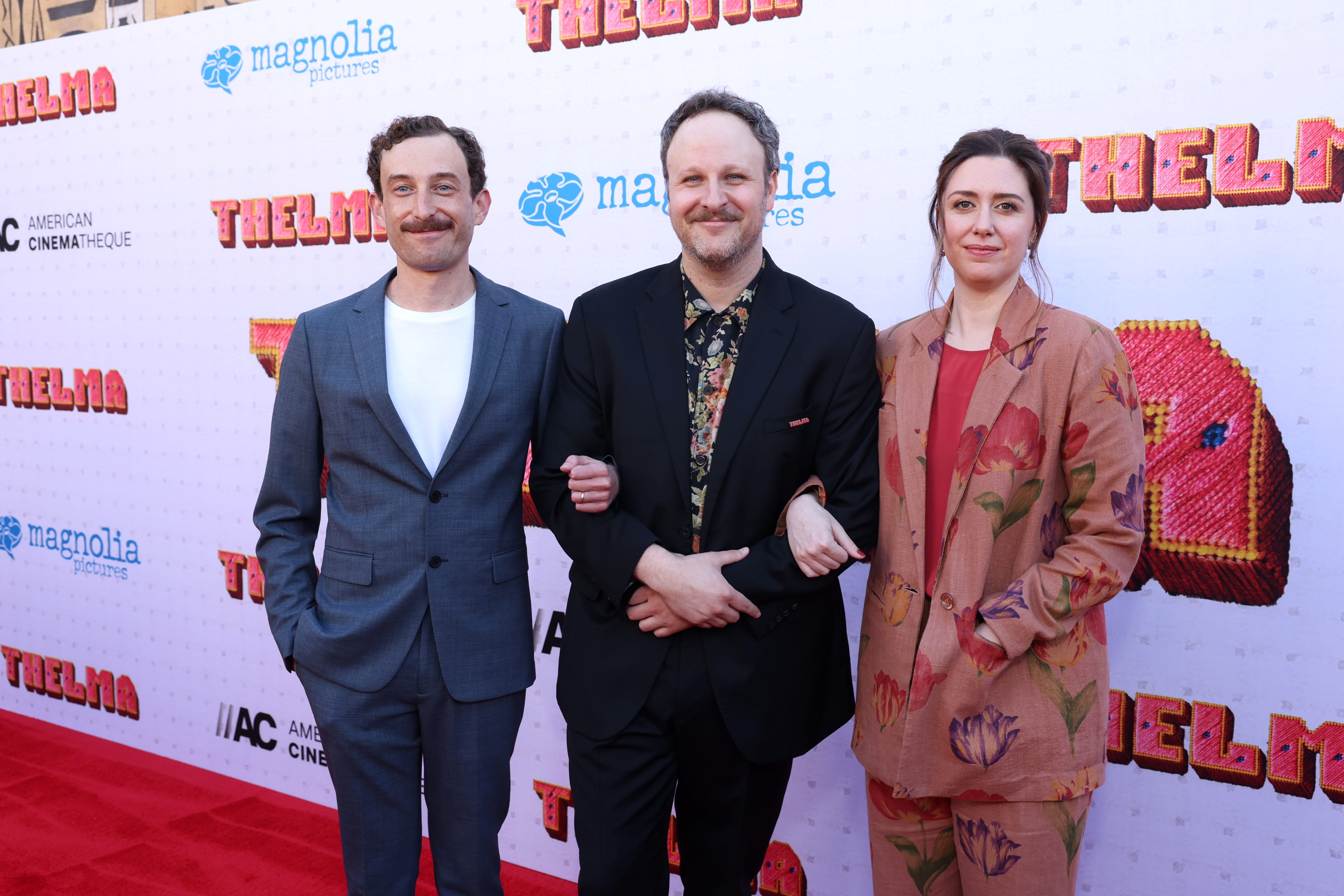
A nominee for the 2025 Producers Award at the Film Independent Spirit Awards, Zoë Worth, a writer, producer, and actor, has built a career at the intersection of creativity and collaboration. Reflecting on the distribution journey for THELMA, which premiered at the 2024 Sundance Film Festival, Zoë discusses navigating high-stakes distribution, balancing risk with reward, and crafting thoughtful strategies to connect films with audiences.
I’d love to start with your premiere of THELMA at Sundance and go through the film’s journey. What was it like when you got the acceptance call? Did you jump right into strategizing for a sale?
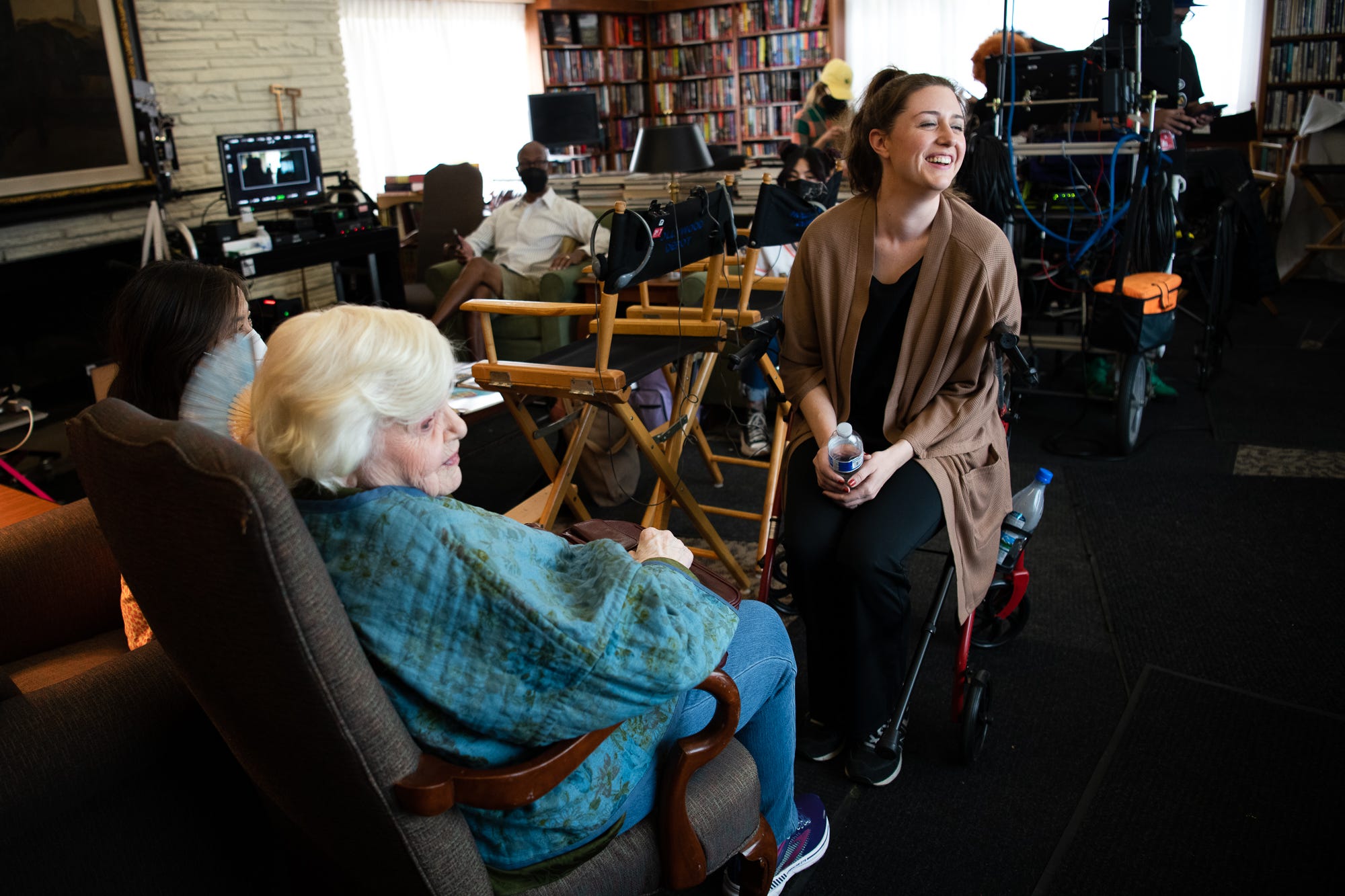
The two things I remember were, first, falling to my knees on the deck of my apartment and calling my mom crying, and second, immediately booking an apartment for June Squibb, the lead actress in the film. I’ve been to Sundance many times as a fan and know what it’s like to traverse the ice in Park City. My first moves were all about how we were going to make sure June could get around the festival safely and comfortably.
We didn’t share the movie with anybody until the premiere, though there were a couple of distributors that reached out to watch it. We didn’t sell any foreign rights or come in with a foreign sales agent. We did the risky all-or-nothing play.
Honestly – and I’m not exactly proud of this – it wasn’t really until walking to our sound check ahead of our premiere at the Ray Theater that I turned to our director, Josh Margolin, in the snow and said ‘I guess it’s also time to sell the movie.’ Remember, this was my first time!
I think it’s helpful to hear that the risky play can pay off, though that remains rare. Would you repeat the experience?
I learned so much through this entire process – from development to physical production, post, through going to Sundance and finding a distributor, to release and beyond. I’m so grateful to Magnolia Pictures for having such faith and taking a big swing with a wide release on THELMA. They taught me so much and did such a fantastic job. They also really let Josh, my producing partner Chris Kaye and I into the room to be part of the marketing strategy. I felt like I got a really transparent look into the distribution business, and – as exemplified by my naive blindness in preparing for a sale – I’ve come a long way in how I would approach sales for next time.
What would you ask next time? Or better yet, thinking about the filmmakers headed to Park City, Austin, and other places in the Spring, what would you tell them to research and to learn in advance?
I think we are living in such a scarcity mindset as independent filmmakers that we’re ready to jump at any offer and get that part out of the way. We come from a real crossing-the-fingers perspective and are very focused on mitigating against bad case scenarios. That’s for good reason but I think it’s equally important to ask: what about boom case scenarios? What does winning look like if you were to win big?
Prior to THELMA, I had one-track-mind for getting the best minimum guarantee (MG) as you, of course, have a responsibility to pay back your investors. Now, I have a better understanding of the relationship between the MG and other aspects of backend, and how those factors work together. Ask the question: where’s your upside? Is it just in covering the base of the MG and recoupment? I would suggest talking to investor partners about what it might mean to leave more upside available in the case of a theatrical box office success story. The MG is one way to know you’re making money, but it’s a different kind of responsibility to think through how a team might also make money in ways that might seem more speculative. There are also goals that aren’t purely financial, oblique upsides to consider.
When you’re in the deal room, you’re also asking questions about if you will get a theatrical release, will people go see the film in a theater. I think it’s important to run all deal mechanics through real world possible scenarios. If the film ends up being a box office sensation, how will we feel about the deal we’re holding in our hand right now? What if we don’t get a theatrical release at all, or the film doesn’t do well in theaters, how do we feel about it then? Remember to look at the deal through positive prisms; don’t only focus on worst case scenarios.
Practically: I’d ask someone to walk you through the high case, the medium case, and low case scenarios, laying out the financial percentages and the math of all. Especially if you’re like me and you’re not a math person. Having that trusted person is really critical.
Shifting to working with your distributor Magnolia Pictures, you say it was a collaborative process with marketing, what did that look like? How was your input considered?
In our first meeting with Dori Begley, Neal Block, and the rest of their team, it was clear to us that they saw the movie like we did: as a cool movie for many different audiences. Many of the other distributor conversations we were having were much more tightly focused on a core demographic of seniors. Which of course, we care and cared about. But with Magnolia, we knew off the bat that we were speaking the same language creatively. They were interested in getting young people to see the film alongside the 60+ audience. That alone told us so much.
They pitched us on THELMA as a tentpole film for them, because they were going to release it wider than any of their previous movies. They talked about how that wider audience would be central to the marketing campaign, the trailer, and the artwork. We were all very aligned on wanting and believing that people would seek the movie out in a theater. As such, there was mutual trust on the distributor side and the filmmaker side, and that made it really successful. I know I’m going to try to fight for a relationship like that every time in the future– but realize it was also very special.
I know there were a few collaborations you did with exhibitors for the theatrical release, including a special needlepoint kit with Alamo Drafthouse. Can you share more about the collaborations you did and how they came about? Was it your team driving that push? Magnolia? Did the exhibitors reach out to you?
First off, we were mad men and women on the festival circuit. We went to dozens and dozens of regional festivals which was so much fun. Josh Margolin, the writer and director of the film, doesn’t love to fly, so we took a lot of trains and a lot of car rides. We knew there was going to be a theatrical release, so we kept that in mind as we screened at regional festivals. Closer to release, Neal at Magnolia arranged with AMC to do a Secret Movie Club where people show up on a Monday night in advance of the release not knowing what they were going to see. That created a lot of fun word of mouth during our lead up.
We also did a ton of Q&As here in Los Angeles and in NYC. We took the hero scooter to Alamo Drafthouse for photo ops. We did a Grandparents Day screening here in LA at Vidiots. There was an indie theater in the Pacific Northwest that did a crafting night with the lights half up. Plus the needlepoint kit at Alamo Drafthouse, which was part of these special crafting screenings around the country.
One of our biggest collaborations was with AARP. We reached out to them well in advance to discuss membership screenings. We asked for their input on which markets they felt would be good to target and it turned out there was such overwhelming interest from the AARP local chapters that they ended up buying out a bunch of screenings. That partnership took place in the first week of our release, which really helped launch the film.
Usually a bigger release means a substantial amount of marketing money is spent, but a lot of the collaborations and social media marketing that you did seemed low-cost and the film benefited greatly from organic word-of-mouth. Do you have a sense from Magnolia on how much was spent on marketing? What was your participation in that part of the negotiations?
You know, I kind of picture myself, Josh, and Chris as being very talkative passengers in the car, giving a million ideas and learning which ones were helpful and which ones weren’t. We also put a lot of our own time in. For example, I made social media posts for every single indie theater where the film played. Neal gave me the theater list for where it would play, and using Canva, I just made a simple social media asset of June on the scooter with fireworks behind her. Neal sent that to every indie theater that played the film over the 4th of July weekend and they all loved it. It took a few days, but it wasn’t a crazy amount of time. It was a handmade special thing for people who were playing our film.
I think one of the key things I’ve learned in this process is to test ideas out, lean into what works, and always try to lead with authenticity. June Squibb on a scooter was such a fun piece of key art that we had unlimited access to, and we used that image to communicate the joy and fun of the film. We kept coming back to communal joy and to being authentic and fun in all of our social media and that seemed to really resonate with audiences.
In terms of spending money, there were some things that I had previously assumed were standard that we did not do. A billboard? A bus stop? They are all so expensive. It was not a good way of spending money. We really focused on digital and direct-to-audience marketing. And again, there was this handmade quality to the entire campaign. Giovanna Vicini and Carley Townsend on Neal’s team at Magnolia worked tirelessly and with real ingenuity and human touch.
I think that human touch was really felt and appreciated in our marketing campaign. You could tell ours was made by people who worked their asses off and that it was from the heart.
Clearly the film resonated with people. You cleared $12 million at the box office. It was a summer indie tentpole and benefited from being able to grow in theaters. How did you approach the windowing strategy with Magnolia? So many titles are in theaters for a week and then go straight on to TVOD or SVOD. What were your desires going into the process?
From the beginning, we were always thinking about summer, focusing on the comedy, and not as concerned with an overt awards play. We wanted the film to be in theaters only for at least 30 days and Magnolia felt the same way. So we opened in late June and hit PVOD (premium video on demand) one month later while staying in theaters. We used Grandparents Day as a way to kick off the strategic PVOD chapter, which was a way to make sure older audiences knew they could watch this at home. With that audience in particular, we knew they may not be up for going to the theaters, so it was a way we could engage with them while the film had buzz.
Our SVOD release on Hulu was just ahead of Thanksgiving, which felt really nice for family viewing. We’re hoping it gave us some momentum in the awards conversation because we are a smaller operation without the money or campaign resources that the big dogs have.
Across the board, I’m curious about what kind of data you had access to throughout the process, be it theatrical performance or social media metrics.
Magnolia was very transparent with the theatrical data. The box office data would come in at different times during the week, and they would compile it and share it with us weekly. They’d also share what was hitting on social media. Really, anything we asked to see they would share with us. With our streaming release on Hulu, I don’t know what to anticipate. I know streamers have their own layers of opacity so it will be interesting to hear what Magnolia learns. I’ve never encountered this part before, so I’ll report back what I hear!
In closing, what are some key things you’re taking away from THELMA as you head to work on your next projects?
I think what worked was something my mom always says: “Keep the main thing the main thing.” Yes, I showed up to Park City thinking more about how June will make it across Main Street if it’s snowing, and maybe a little less about sales or business. But the main thing was always the movie, was always June. That’s what we focused on the whole time. And sometimes that means you have to have blinders up about the rest.
I think about an idea from Christine Vachon’s first book about the beauty of naivete when you’re just starting out. It allows you to develop your instincts, to listen to your own rhythm and to what you think is truly important. That thinking did us a lot of good on THELMA.
Working with people you trust, particularly in the inner sanctum of the creative process, is so important. In comedy, the worst possible thing is to overdevelop or debate what's funny. The joke will die. Let the voice sing.
Treat people well.
And with distribution? What lessons do you take away for next time?
I feel that now I know what to ask for and about. And I know just how long the life of a movie is after it’s in the can. I’ll be starting to consider the narrative of the movie earlier, things like how you’re framing it creatively for audiences, but also what about the story behind-the-story is compelling to the uninitiated. For example, June Squibb breaking through in her first leading role in her 90s is a pretty interesting press story – especially in a film about a nonagenarian doing something extraordinary.
Soon after you've come to a script or a vision for the film itself, it’s a good idea to consider how you might talk to an audience about the movie’s existence. How to find something special or urgent about it. I think, for me, THELMA is a story about persistence, trust, and the fact that there is so much more to comedy than is currently being explored or supported.
Great interview. May we all find a magnolia equivalent!
It was such a treat to spend time chatting with Zoe!